How to Build a Business That Runs Without You (The Systems-First Playbook)
Why systems build businesses, not hustle
Most people don’t build businesses.
They build jobs… for themselves.
If this sounds familiar, you’re not alone: you’re hustling 12 hours a day, answering every client email, sending every invoice, approving every task. And deep down you know—if you took a week off, everything would grind to a halt.
That’s not freedom. That’s not scale. That’s just self-employment with extra stress.
The difference between a job and a business? Systems.
Why Founders Get Stuck as the Bottleneck
When you start, you are the system.
You answer the leads.
You deliver the service.
You chase the invoices.
That works… until it doesn’t.
Because the more you grow, the more you become your own bottleneck.
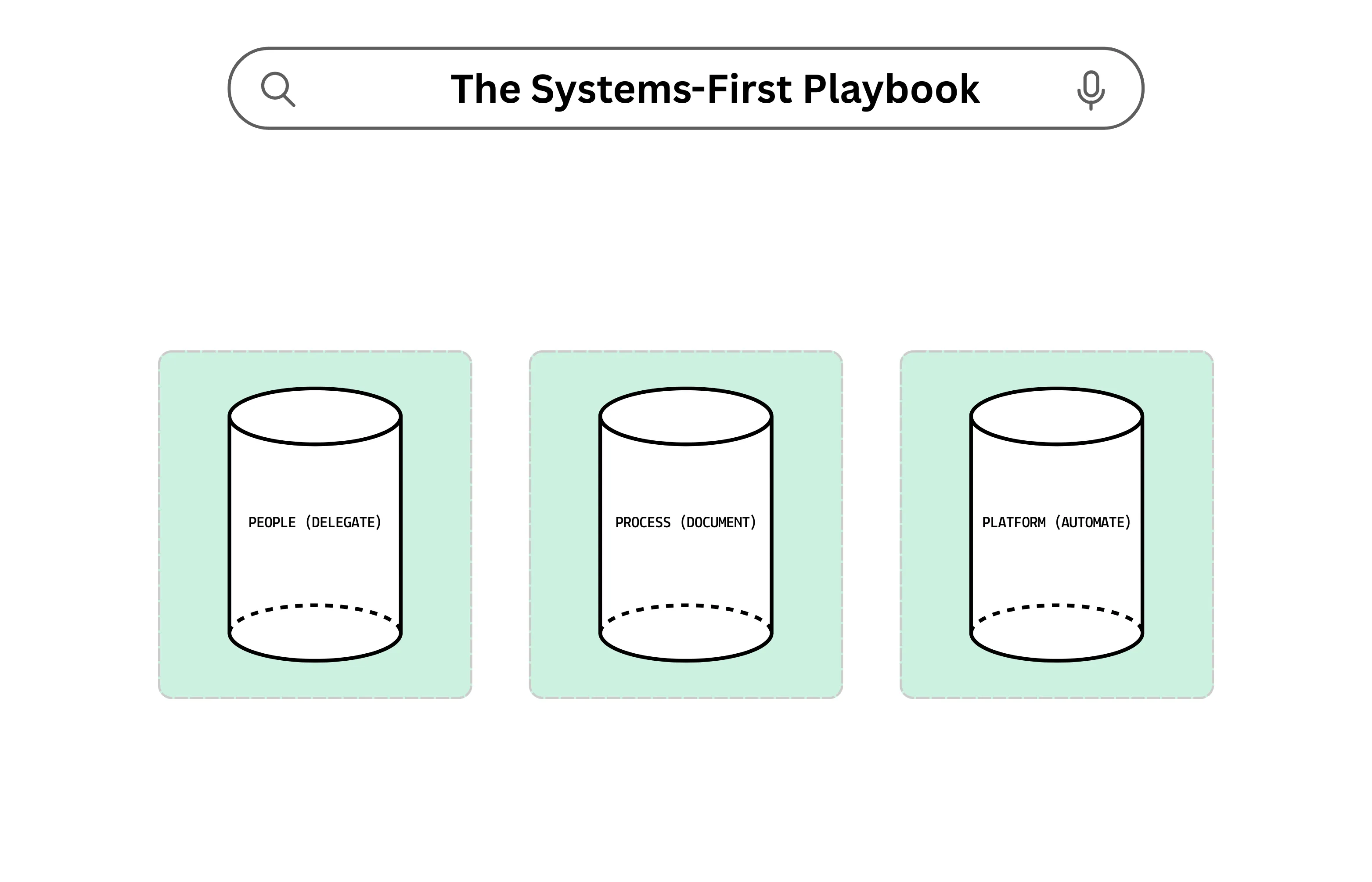
Systems flip the script. They take repetitive work out of your head and put it into:
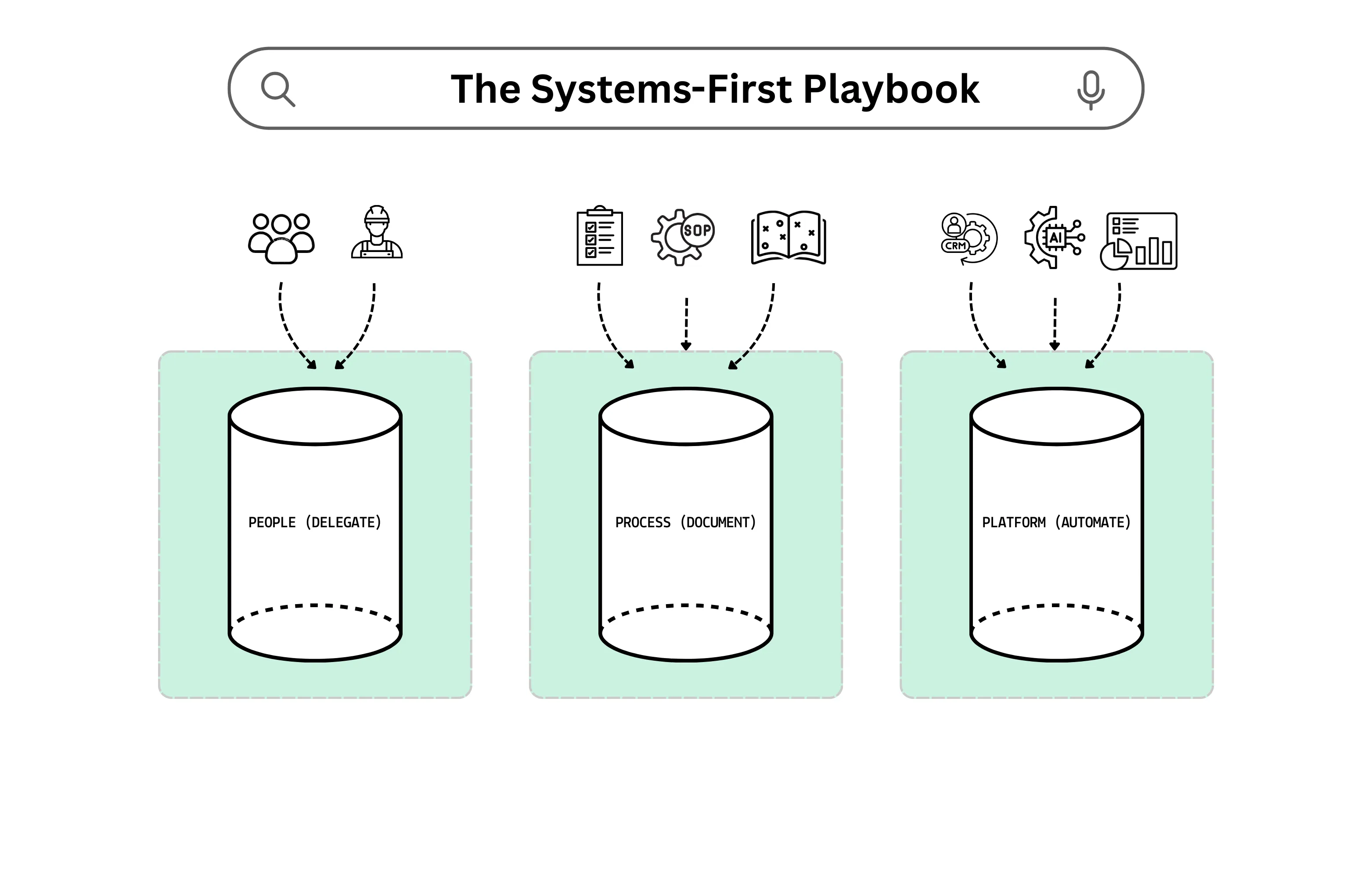
People (delegated tasks).
Processes (documented steps).
Platforms (automations + tools).
The 3 Layers of Leverage
Think of your business like a machine. You need three layers to keep it running without you:
1. People → Who does the work
Employees, contractors, or VAs.
Human leverage.
2. Process → How the work gets done
Checklists, SOPs, playbooks.
Process leverage.
3. Platforms → What supports the work
CRMs, automation tools, dashboards.
Tech leverage.
When all three work together, you get scale.
Real-World Example
Let’s take something simple: a new client signs up.
Without systems:
You manually email them.
You create their folder.
You add them to your task list.
You notify your team.
With systems:
Stripe payment triggers a Make.com automation.
That automation:
Sends the welcome email.
Creates their Notion dashboard.
Assigns kickoff tasks in Asana.
Notifies your team in Slack.
Now, whether you’re at your desk or on the beach, the machine runs.
Your First Systems Map
If you want your business to run without you, the first step is mapping it.
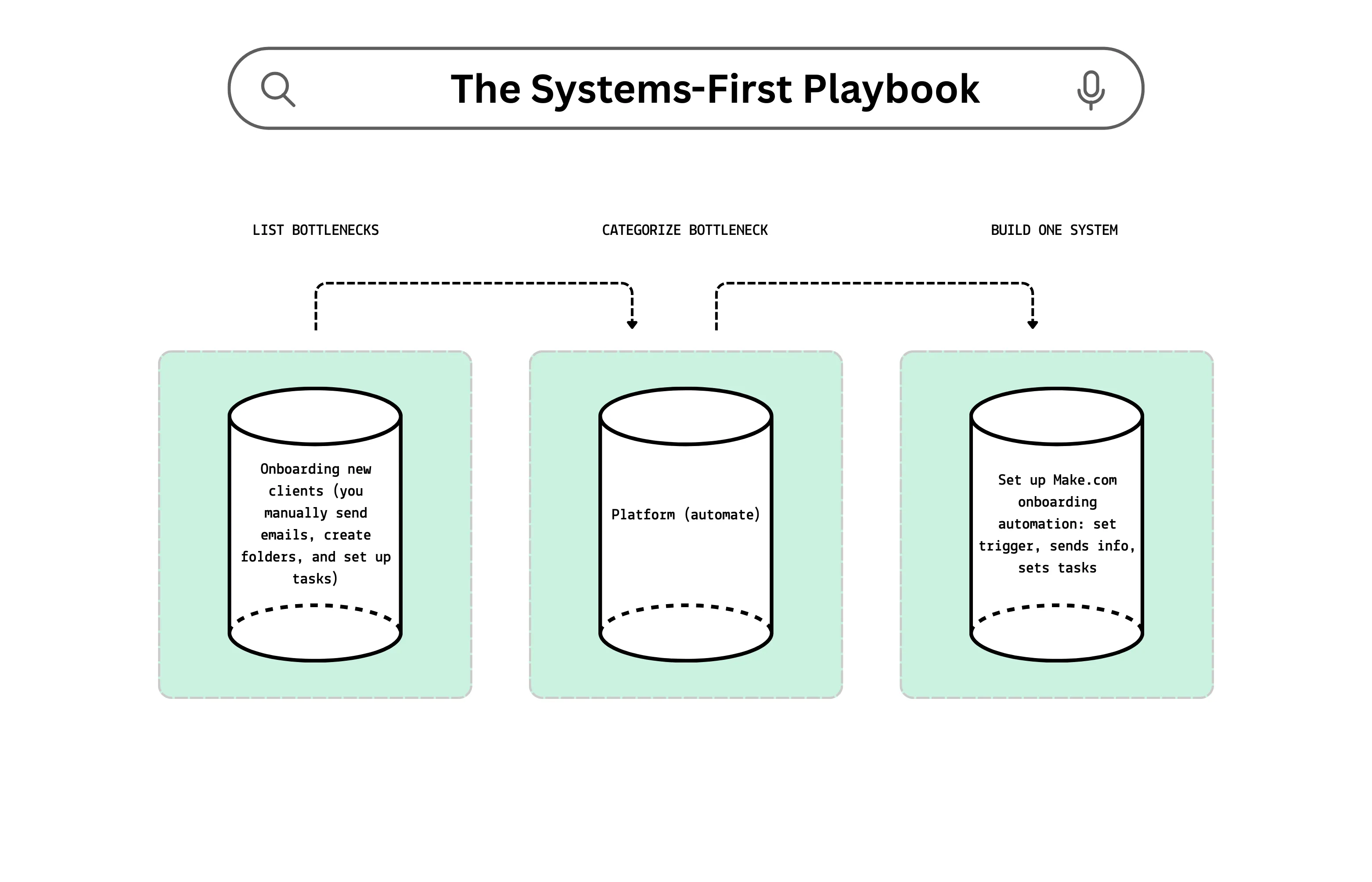
Step 1. List your bottlenecks
Where are you the middleman right now?
Step 2. Categorize each bottleneck
People (delegate)
Process (document)
Platform (automate)
Step 3. Build one system
Pick one bottleneck and solve it. Don’t overcomplicate — small wins stack.
Pro Tip
Don’t try to automate chaos.
First, document the process. Then, automate it.
Bad process × automation = bad results faster.
This Week’s Challenge
Write down one task that stops when you stop.
Map out how you could shift it into:
A person (delegate)
A process (document)
A platform (automate)
That’s your first step toward building a business that runs without you. Small wins stack — and once you start replacing yourself, momentum takes over.