The Death of the Modern Worker
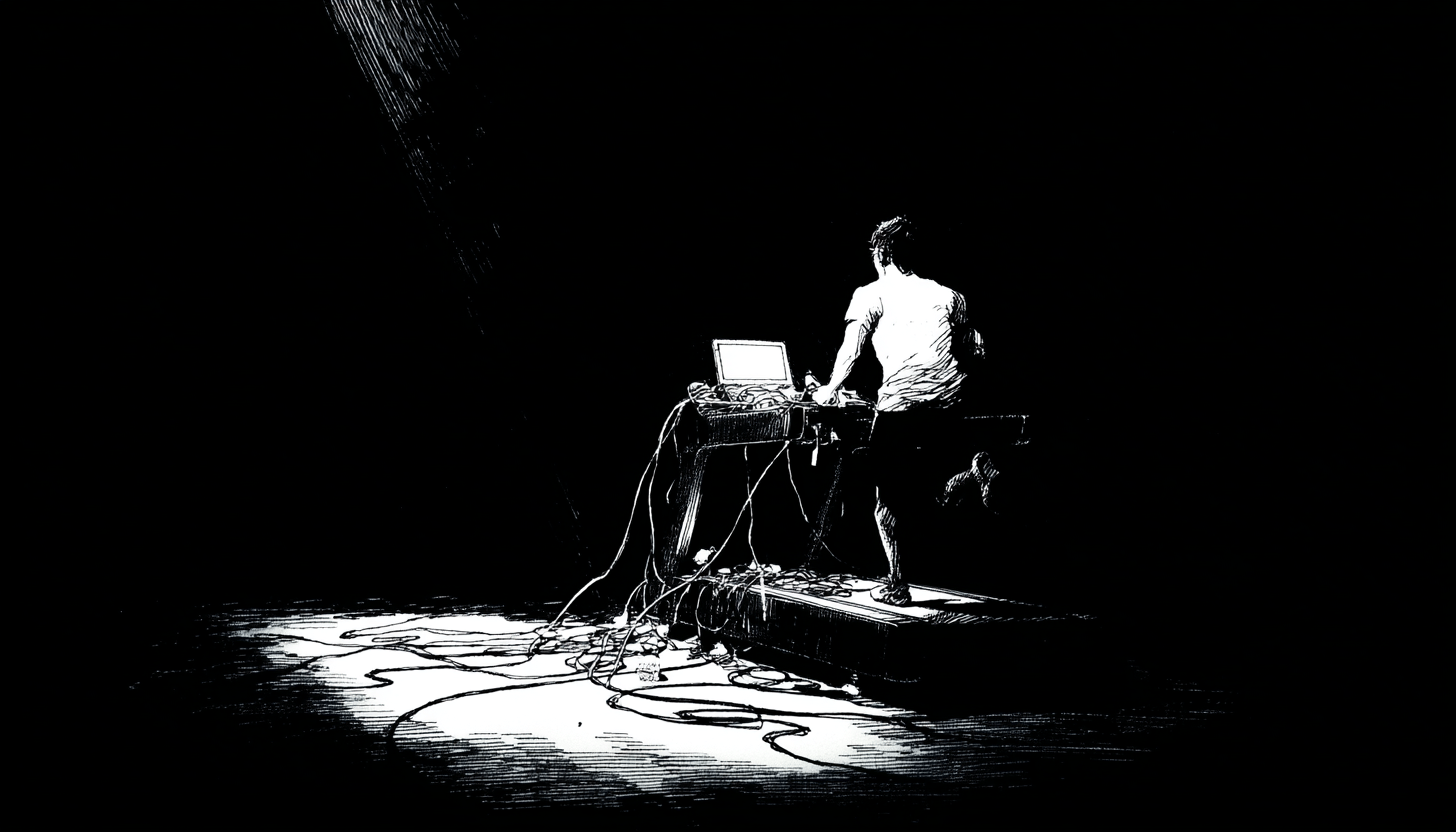
Work 1.0 is dead. 2.0 is outdated. 3.0 is here — automation and AI redefine work from effort to design, so we can stay human.
Work is dead.
Clock-in, clock-out? That’s ancient history.
What remains: deep thinking, creativity, and machines.
Growing up, I barely saw my dad. He slept in his car building his cable contracting business from nothing.
I followed that blueprint. Though I wasn’t always wired this way.
I was carefree and creative until my early 20s.
Then I started grinding through every task like it was my last. Mind racing with to-dos when I desperately needed sleep.
What my dad taught me: dedication is everything.
What experience taught me: focus withinthat dedication matters even more.
In Work 1.0, the path was clear. Show up, climb higher, repeat.
Linear.
Predictable.
By the time I clutched my university degree, that promise was already broken.
My mentor walked straight into a $100k job in his twenties.
For me, and most people right now, that was a beautiful lie.
A system built on what was, not what is.
This shift isn’t new.
First came the factory worker: hands traded for hours.
Then the knowledge worker: degrees traded for salaries.
Now, it’s the machine. And it doesn’t trade. It takes.
You’re in one of three boats: terrified of losing your job, having a full-blown identity crisis, or you’ve already spotted this shift and are pivoting to a different type of work.
The music industry felt it first. Napster, LimeWire. The collapse of record labels as gatekeepers. Suddenly, the artist became the business. Independent.
But it didn’t stop there.
Work 2.0 was Tim Ferriss. The 4-Hour Workweek. Outsourcing. Digital nomads. Building freedom through leverage instead of permission.
Being early looked like luck. Being late looked like failure. But both were just lessons in how fast the ground was shifting beneath us all.
I felt this myself. I wasn’t too late to music — I just missed the shift. Playing shows downtown at the Hard Rock Café, scanning the crowd for a scout, when I should’ve been building an audience online.
And now? That familiar tingle at the back of my neck. The sixth sense that says the ground is moving again.
Work 1.0 — The Industrious Model
Work was quantifiable.
Work = effort.
You could see the sweat, hours and labour.
Rewards were right around the corner.
Right now, productivity culture is a polished version of this. But there’s a crucial difference: the work is aimless.
For my parents, it was survival. Immigrant culture. You swim or drown.
They called my dad “Dollar Joe,” because he did any contracting job for a dollar.
But that’s how he earned respect. That’s how he thrived. And he did it with a genuine smile on his face.
I admired his work ethic.
But now as a dad myself, I question how it was possible. What was sacrificed?
I inherited that relentless drive, but every time I follow it blindly, I sacrifice something vital.
My relationships, my friendships, my sanity.
I remember working until 3AM on my track Closer, riding that creative breakthrough. Yes, those nights are sometimes necessary. But sustaining that intensity burnt me out completely.
Work 2.0 — The Tim Ferriss Shift
Tim Ferriss refined the game.
It was revolutionary.
Work for 4 hours daily, and be wildly successful.
All about efficiency, outsourcing, buying back time.
We were conditioned to do more, but this model flipped the script — do less of the wrong things.
It introduced VA’s, outsourcing, batchwork.
Yet most businesses and people haven’t caught up.
They’re stuck hacking productivity instead of questioning the fundamental nature of their work.
This was me… saving templates, testing workflows, systematizing before I even had anything worth systematizing.
I remember creating an entire Mix Process without actually having one.
Just guessing. Preparing for that mythical day when I’d have endless clients.
Didn’t happen.
I also remember researching VA’s when I couldn’t even afford one.
Chasing leverage but completely missing the point.
Work 3.0 — The Automation/AI Era
While most people are still wrestling with 2.0, 3.0 has already arrived.
AI and automation don’t just buy back hours. They rewrite the definition of work.
Effort doesn’t equal output anymore. What matters is what you design.
I felt this the first time I worked with GPT to figure out how to build a two-way sync for a client portal.
I just stared at the screen.
It wasn’t the answer spitting back at me. It was like the wall I’d been bashing my head against suddenly cracked open.
Hours of research, YouTube tutorials, half-baked notes in Notion, all reduced to a conversation.
Ask. Adjust. Try again.
And as I’m deep in it these days, my son is right there, standing with his hands gripping the playpen.
Watching me.
He smiles. Shakes his head.
I smile back. Shake mine too.
Because there it is — the thing my dad never had, the thing I’ve been chasing in Work 3.0. The ability to move faster without burning out. To buy back minutes. To turn problems that used to eat whole nights into something I can solve before dinner.
And in that moment, I realized: automation isn’t about the tech.
It’s about this.
Reclaiming the time to notice my son smiling at me instead of missing it because I’m lost in another 3AM breakthrough.
IV. The Trap & The Opportunity
The trap is simple: chasing optimization forever. Work 2.0 on repeat.
Every new tool, every new workflow, every “hack.” You start to become the very thing you were trying to avoid, a machine.
The opportunity is different.
Automation isn’t an eraser, it’s a buffer.
It gives you the space to stay human.
I’m not all the way there yet. I’m just starting Automanium, just laying the foundation. But for the first time, I can see the path forward. The vision. The mindset I was desperate for before — when I thought the answer was working harder instead of building better.
Systems aren’t about becoming robotic. They’re about making space for what isn’t.
VI. Close
Work 1.0 is dead.
2.0 is already outdated.
3.0 is here.
The real work now?
Build systems so you can stay beautifully human.
Chat soon,
Harrison