The Lie of Done
You don’t need closure. You need momentum.
Your workflow is lying to you.
It tells you that progress means crossing things off.
That once the box is ticked, the burden disappears.
But the truth is more uncomfortable: the work never ends. It only changes form.
We treat life like a checklist, but it’s really a chain.
Every action links to another.
Every cycle folds into the next.
The people who win aren’t the ones who “finish.”
They’re the ones who build continuity.
The problem is that most of us were raised on the myth of the finish line.
You graduate.
You launch. You ship.
You rest, or at least you think you can.
And yet, every time you arrive, the anxiety creeps back in.
That quiet hum that says, something’s still unfinished.
When I finished my graduate degree, I expected stillness.
Instead, I felt aimless.
The same happened when I built my first big business automation.
I spent weeks engineering a system to handle reminders, only to realize the real work was maintaining it.
I didn’t finish something; I just created a new identity to manage.
That’s the hidden cost of believing in endpoints — you start thinking peace lives on the other side of productivity.
But it never does.
The moment you complete something, you inherit its consequences.
The Myth of the Finish Line
Our brains hate that truth.
They crave closure.
Dopamine hits when you check something off… not when you sustain it.
Which is why so many systems collapse under the weight of their own completion.
We confuse the satisfaction of ending with the meaning of enduring.
Most workflows are built for tasks, not for life.
For crossing off, not circling back.
For winning sprints, not sustaining seasons.
Take any modern workplace.
Everyone’s busy.
But the busyness is a smokescreen.
It hides the cognitive load of unfinished things, messages unsent, documents awaiting review, decisions deferred because they don’t fit neatly into a task manager.
We tell ourselves we’re organized because everything has a checkbox.
But checkboxes are lies.
They give the illusion of progress while the real work, the thinking, the connecting, the deciding what matters next, sits idle.
The Weight of Unfinished Loops
That’s where exhaustion really comes from.
Not the volume of work, but the ambiguity.
The brain can’t relax when it doesn’t know what’s coming next.
It clings to every loose thread like a survival instinct.
That’s why people wake up at 3 a.m. remembering an email they never sent.
The mind hates unfinished cycles.
Here’s the paradox: your brain isn’t lazy.
It’s just not a project manager.
It’s designed for insight, not inventory.
It wants to imagine, not index.
Yet we force it to store hundreds of unlinked fragments.
And then wonder why we feel fragmented.
You can’t expect a tool built for storytelling to run your operations.
That’s why systems exist.
Not to mechanize your life, but to give your mind permission to think again.
Your Brain Was Built to Dream, Not to Track
The human brain was never meant to manage modern complexity.
It evolved to sense patterns, not process notifications.
To create meaning, not manage calendars.
When you treat your mind like a task app, it revolts.
You feel it as brain fog.
As procrastination.
As distraction.
Those aren’t failures of discipline. They’re symptoms of misuse.
We ask our brains to be accountants, but they were born poets.
The point of building systems isn’t efficiency.
It’s liberation.
It’s giving your thoughts room to breathe again.
Automation Without Awareness
Most people adopt tools and automations to escape chaos, not to understand it.
They want to fix overwhelm without confronting what causes it. The belief that a system can save them from uncertainty.
But uncertainty is part of life.
Automating chaos without clarity doesn’t make things better.
It just moves faster in the wrong direction.
A messy workflow that runs faster is still messy. Only now it’s automated at scale.
The real shift happens when you use automation to create feedback, not friction.
The best systems breathe.
They expand and contract like lungs.
You don’t build them once; you grow them.
From Cycles to Spirals
Every strong system mirrors nature: growth, decay, renewal.
Trees shed their leaves not because they’re broken, but because it’s the only way to grow again.
Your workflows should do the same.
Breathe, reset, reemerge.
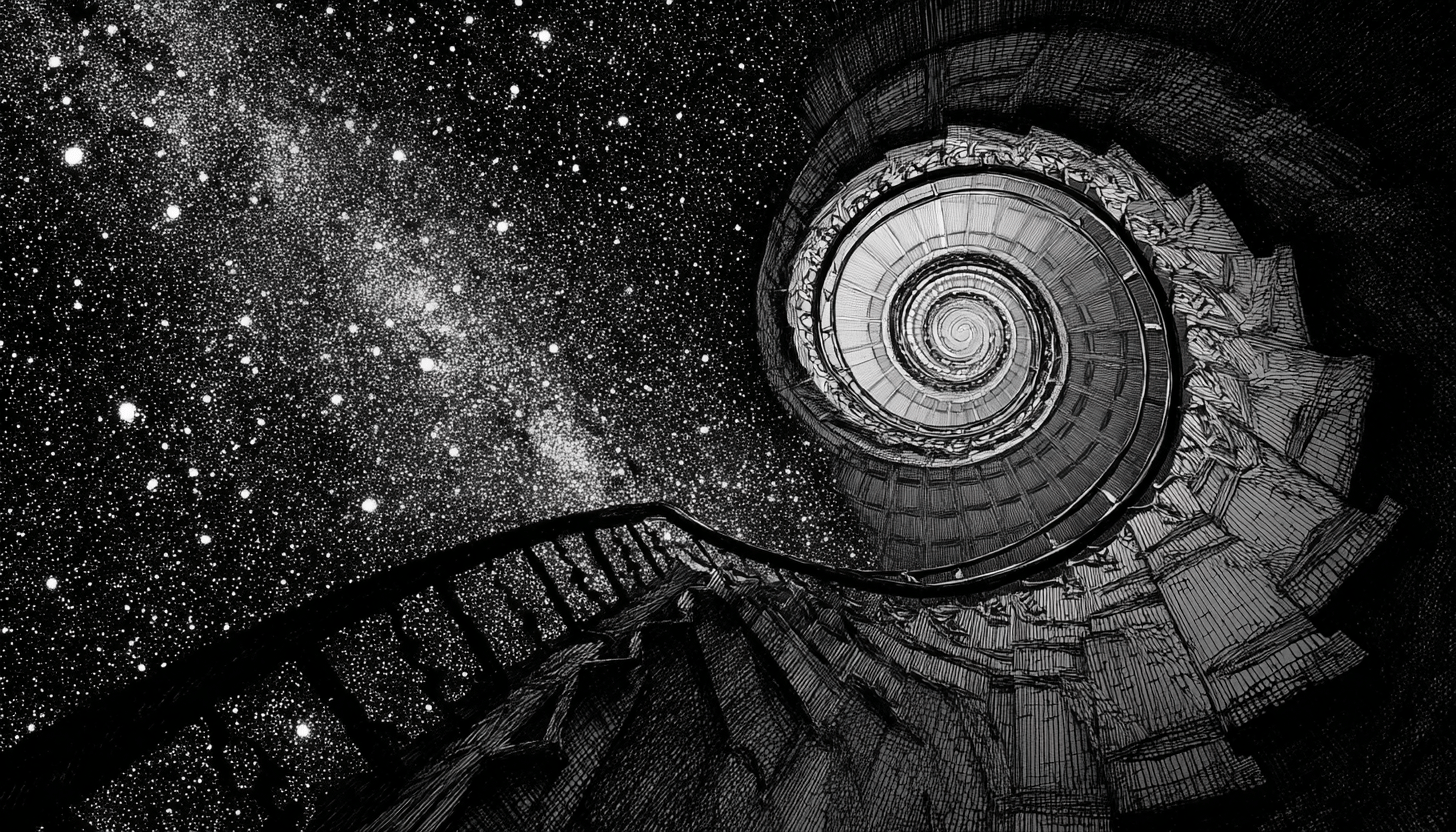
That’s the difference between a cycle and a spiral.
A cycle repeats; a spiral evolves.
You revisit the same points, but from a higher plane each time.
The work doesn’t disappear. You just carry it with more grace.
To build spirals instead of cycles, stop asking, What’s next on my list?
Start asking, What’s the next version of this pattern?
That question changes everything.
It turns maintenance into mastery.
The Chain Over the Checklist
When I started applying this to my business, everything slowed down… in the best way.
Instead of trying to finish projects, I designed them to evolve.
Each system had a feedback loop.
Each process had a reflection point.
I stopped crossing things off and started linking them forward.
That’s when the anxiety dropped, not because I was doing less, but because I could finally see how the pieces connected.
Zoom out far enough and every task becomes one link in a longer chain; a conversation between who you were when you started and who you’re becoming as you work
You Were Never Meant to Finish
Alan Watts once described life as a kind of heartbeat, systole and diastole, attachment and detachment, forever pulsing in and out.
You get involved. You let go. You return.
And somewhere in that rhythm, you remember the truth: there is no finish line, only the movement between form and formlessness.
Everything you build will eventually fall away.
Every system you create will one day decay.
And that’s not failure.
It’s nature.
You can listen to that passage here: Alan Watts: The Whole Thing Is An Illusion.
When you finally understand that, you stop fighting the rhythm and start dancing with it.
You stop chasing completion and start trusting continuity.
Continuity Over Completion
Each link in that chain matters less than the rhythm of linking.
Each iteration deepens the groove.
The beauty of a chain is that no single link has to be perfect.
Strength comes from connection, not control.
That’s the quiet rebellion against the productivity gospel.
The point isn’t to get things done.
It’s to stay in motion without losing yourself.
Because when you stop treating work as a series of finish lines, something subtle happens.
You stop bracing for the end.
You start living in the process.
And that’s where the peace is — not in the completion, but in the continuity.
Chat soon,
Harrison