The Single Source of Truth Rule
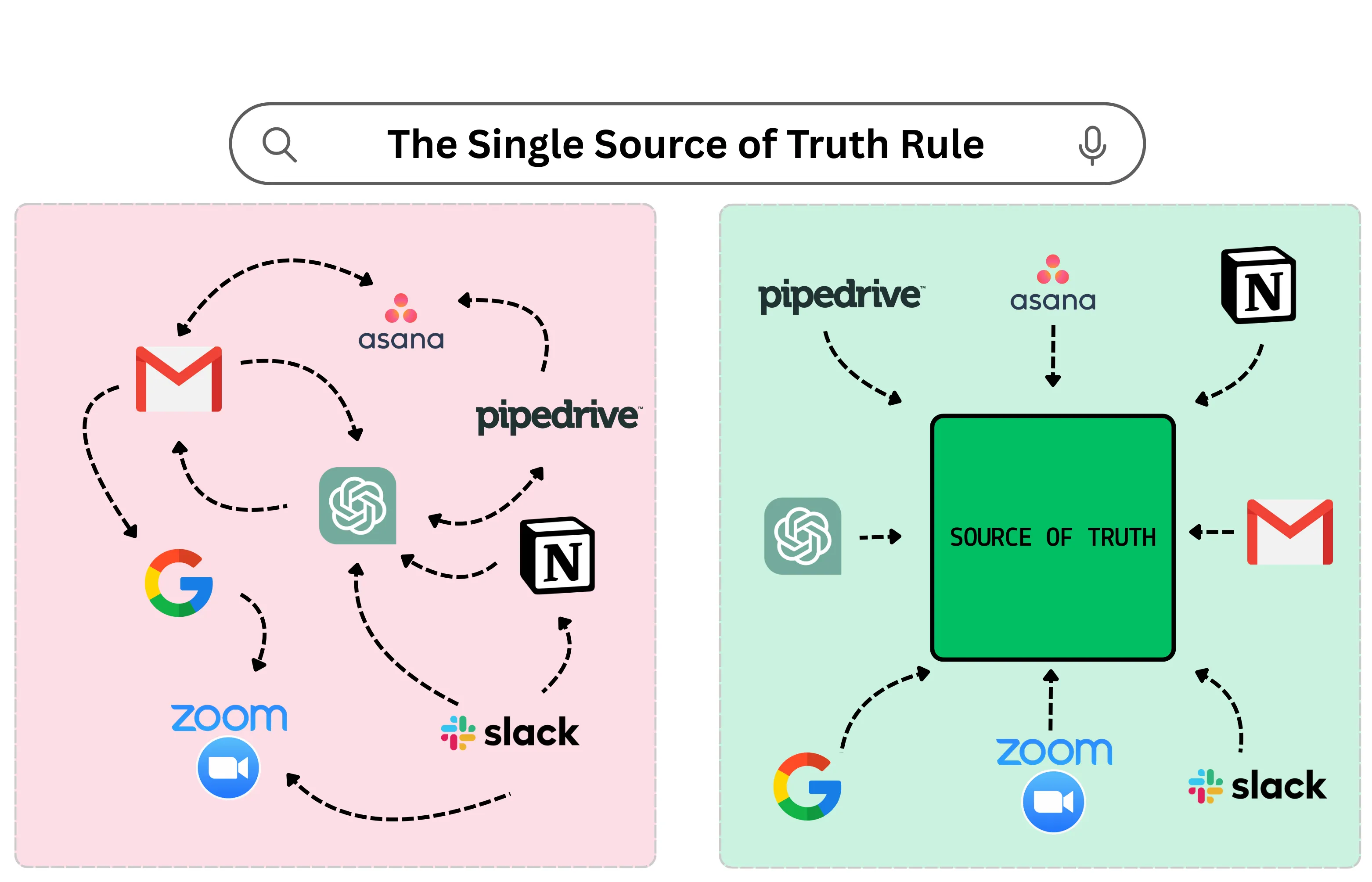
Why every system needs one home for information
Scattered info = scattered focus.
If your client details live in email, contracts in Dropbox, tasks in Asana, and meeting notes in Slack threads… you’re not running a system. You’re babysitting chaos.
The fix? Pick one “home base” where the truth lives. Everything else should point there.
Why It Works
Every handoff in your business is a chance to drop the ball.
Someone forgets to forward an email.
A Slack DM gets buried.
A doc link disappears.
A single source of truth (SSOT) removes the guessing game. Everyone knows: “If I need client X’s info, I go here.”
That means less chasing, less stress, and fewer “Where’s that file?” pings.
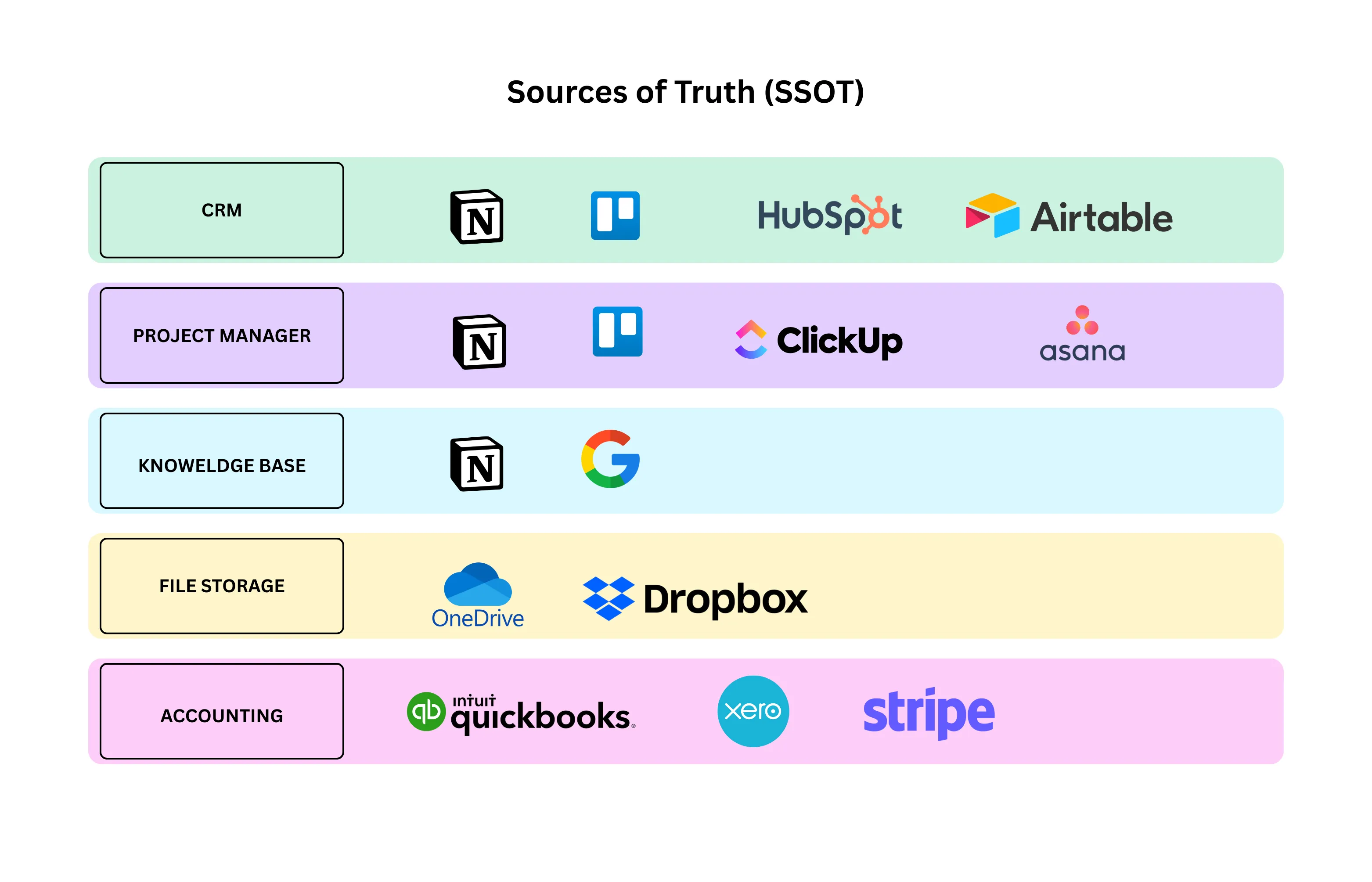
How to Build Your SSOT
Step 1. Choose your hub
Notion → flexible, easy for small teams.
Airtable → structured, perfect for data-heavy work.
HubSpot/CRM → client-first workflows.
Step 2. Define the essentials
Decide what must live there (client info, invoices, deliverables, notes). Don’t overcomplicate it.
Step 3. Route everything in
New contract signed → add to CRM automatically.
New note → drop into the right client dashboard.
New task → assigned in Asana, but linked back to the hub.
Step 4. Train your team (or yourself)
The rule is simple: “If it’s not in the hub, it doesn’t exist.”
Pro Tip
Don’t confuse convenience with clarity. Slack, email, and DMs feel fast, but they’re not a source of truth. They’re just streams.
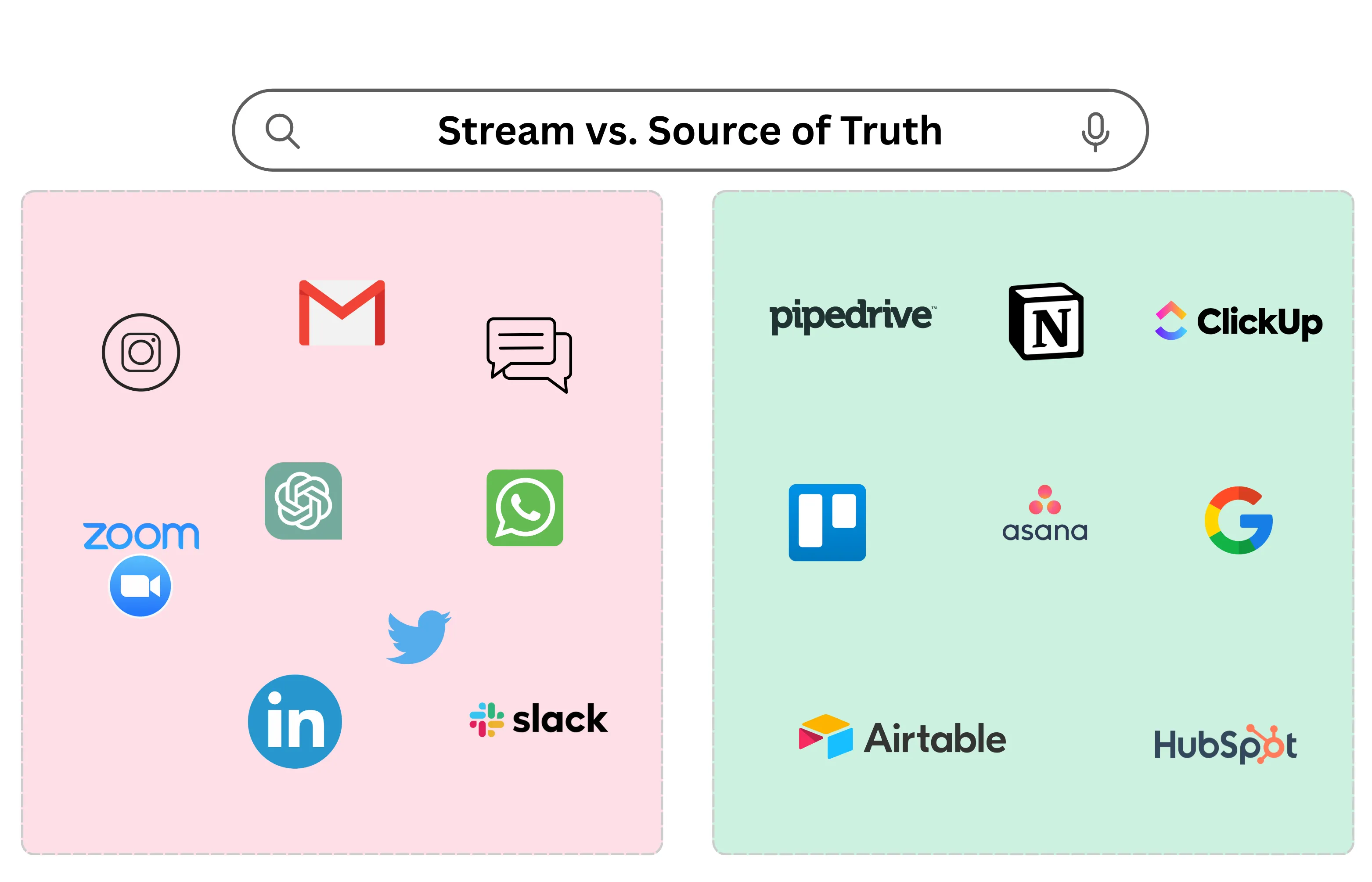
Truth lives in a place that doesn’t scroll away.
This Week’s Challenge
Pick one messy process (like contracts, invoices, or client notes). Move it into your SSOT.
From now on, when you wonder “Where does this go?” the answer is always the same: your source of truth.